
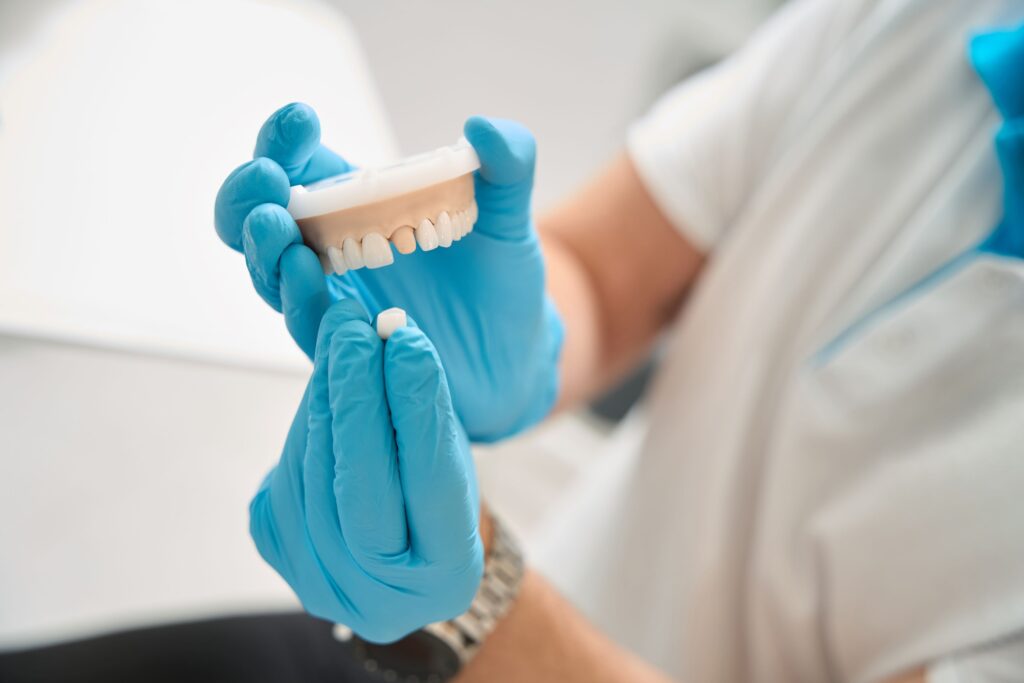
Cavities and minor injuries can often be treated effectively with tooth-colored composite resin that can be applied to restore your enamel. However, if you’ve developed an infection requiring a root canal or have a more severely decayed or injured tooth, your dentist might recommend placing a dental crown.
This is the tried-and-true way to treat teeth that have sustained too much damage for a filling to be effective, but you might feel nervous about the procedure if you’re unsure what’s involved. Continue reading to learn more about how your dentist prepares your tooth for one of these lifelike restorations!
What is a Dental Crown?
A dental crown is a tooth-shaped cap that is usually made from durable ceramic that can be customized to match the tone, size, and shape of your natural enamel. It’s cemented over your injured tooth to restore its functionality and appearance so that you can continue to use it normally, and helps protect it from additional injuries, disease, and decay. Crowns can also be used to anchor a dental bridge, cap an implant, or reshape a worn-down or stunted tooth to enhance your appearance.
These prosthetics often last 15+ years if cared for correctly and aren’t intended to be removed once they’re cemented in place, making them an excellent long-term investment.
How Is My Tooth Prepared for a Dental Crown?
Before getting a dental crown, you must consult your dentist to ensure you’re a good candidate. They’ll examine your condition and take X-rays to determine whether it’s the best way to meet your unique needs.
If so, they’ll need to prepare the affected tooth to ensure that the cap will fit snuggly on top of it. This is done by removing a small amount of enamel before making impressions of your teeth that will be sent to a special dental laboratory, which will use them to design your customized restoration.
Does Getting a Dental Crown Hurt?
It’s natural to wonder whether the process of thinning your enamel might hurt, but your dentist will likely numb the area with a local anesthetic before getting started to help you feel comfortable. Many providers also offer sedatives, such as nitrous oxide (laughing gas) or oral conscious sedation in pill form, to help you feel calm and relaxed the entire time.
Then, it’s possible to feel sensitive or develop mild aches for a few days afterward as your mouth adjusts to the thinned enamel. It’s often safe to take over-the-counter medications, such as acetaminophen or ibuprofen, to reduce associated discomfort.
If you still have questions about the dental crown procedure, your dentist can provide answers that take your unique circumstances into account!
About the Practice
Patients at Roselle Park Dental & Implants benefit from a team of providers eager to help them build and maintain happy, healthy smiles. With a general dentist, orthodontist, and implant specialist onsite, they can provide a comprehensive menu of services, including dental crowns, to meet all your unique needs. Their compassionate approach is paired with state-of-the-art technology to deliver comfortable, accurate results you can count on. You can request an appointment on the website or by calling (908) 245-1745.